Milk and brine testing equipment
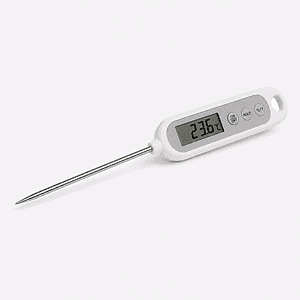
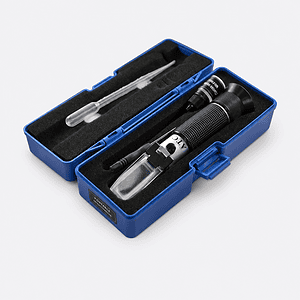
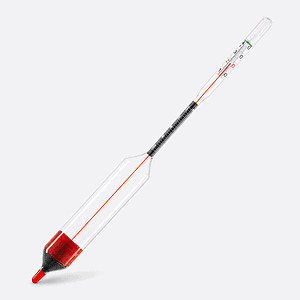
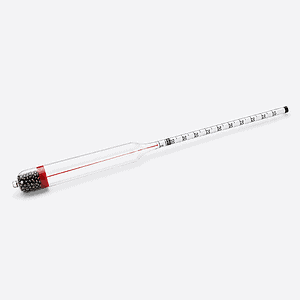
Five tools for dairies: an antibiotic residue test, a lactodensimeter for milk density, a refractometer for dissolved solids, a brine salt tester and a digital thermometer that measures from -10 to +200 °C. With them you check the milk at intake and throughout production.
Showing 5 of 5 products
Showing 5 of 5 products
Milk intake
One can of watered-down milk or milk with antibiotics can spoil the whole vat, so checks are done before a farmer's milk is poured in with the rest. During production, the thermometer and brine tester tell you whether the process is on track.
Antibiotic residues in milk inhibit the culture bacteria: yogurt doesn't sour properly and cheese sets late. Testing is also a legal obligation: the milk processing industry is required by law to test milk for antibiotics and somatic cells. The antibiotic residue test for milk is done at intake, before the milk goes into the vat.
The lactodensimeter measures milk density. Added water lowers density, while skimming raises it, so it's one of the quickest checks against watered-down or skimmed milk. For cow's milk the normal reading is about 1.028–1.032 at 15.5 °C, and the reading is corrected when the milk is at another temperature. Density alone doesn't confirm composition: fat needs a separate analysis.
The refractometer measures the concentration of dissolved solids, such as sugars, proteins and dry matter, in milk, yogurt, whey and other liquids. Many refractometers read on the Brix scale, which was built for sugar. In that case the reading for milk and whey is an approximation: compare it with a lab analysis and use it to track changes from day to day.
The digital thermometer measures from -10 to +200 °C, so it covers every step: pasteurization (72 °C for 15 seconds, or 63 °C for 30 minutes), yogurt fermentation at about 42–43 °C and cheese coagulation, usually at about 31–33 °C. The brine tester shows the salt concentration of the brine. Cheese absorbs salt from the brine, which weakens over time; if you don't measure it, the cheese comes out saltier one time and less salty the next.
Tell us how much milk you receive per day and what checks you do now, and we'll tell you which equipment you're missing. Call us at +355 69 202 6314 or write to us via Contact.
Short answers about dairy equipment. For anything else, contact us.
With a lactodensimeter. Water lowers density, so a reading clearly below about 1.028 (for cow's milk, at 15.5 °C) is a sign of added water. Since fat also affects density, a suspicious result should be confirmed by lab analysis.
Because their residues stop the culture from working, so yogurt doesn't set and cheese sets late, and because testing is also a legal obligation for processors, as we explain above. Test before one farmer's milk is mixed with the rest.
From -10 to +200 °C. That covers cold milk, pasteurization, yogurt fermentation and cheese coagulation.
Dissolved solids, such as sugars, proteins and dry matter, in milk, yogurt and whey. If the refractometer reads in Brix, a scale built for sugar, the reading for milk is an approximation and should be compared with a lab analysis.



A trusted name in Albania's food industry since 1993, offering quality, innovation and reliable solutions for steady business growth.